6 Refurbishing Techniques That Add 20 Years to Chair Lifespan

Refurbishing Techniques That Add 20 Years to Chair Lifespan
We’ve all encountered the inevitable fate of the cheap office chair: the wobbly base, the sagging seat, and the gas cylinder that gives up the ghost after barely a year. It’s an unsustainable, frustrating cycle that simply doesn’t happen with premium, design-led furniture.
But even the best chairs from brands like Herman Miller, Vitra, and Steelcase—chairs engineered for decades of use—need a little bit of TLC after a good ten years of continuous use.
At our core, we’re not just cleaning chairs; we are engaging in high-precision engineering and meticulous material science. We take these chairs, already built like tanks, and employ specific refurbishing techniques that not only restore them to a like-new condition but fundamentally extend their working life by another two decades.
This is the secret sauce: the six technical zones we focus on to ensure that when you purchase a refurbished classic, you’re not just getting a bargain—you’re getting certified longevity.
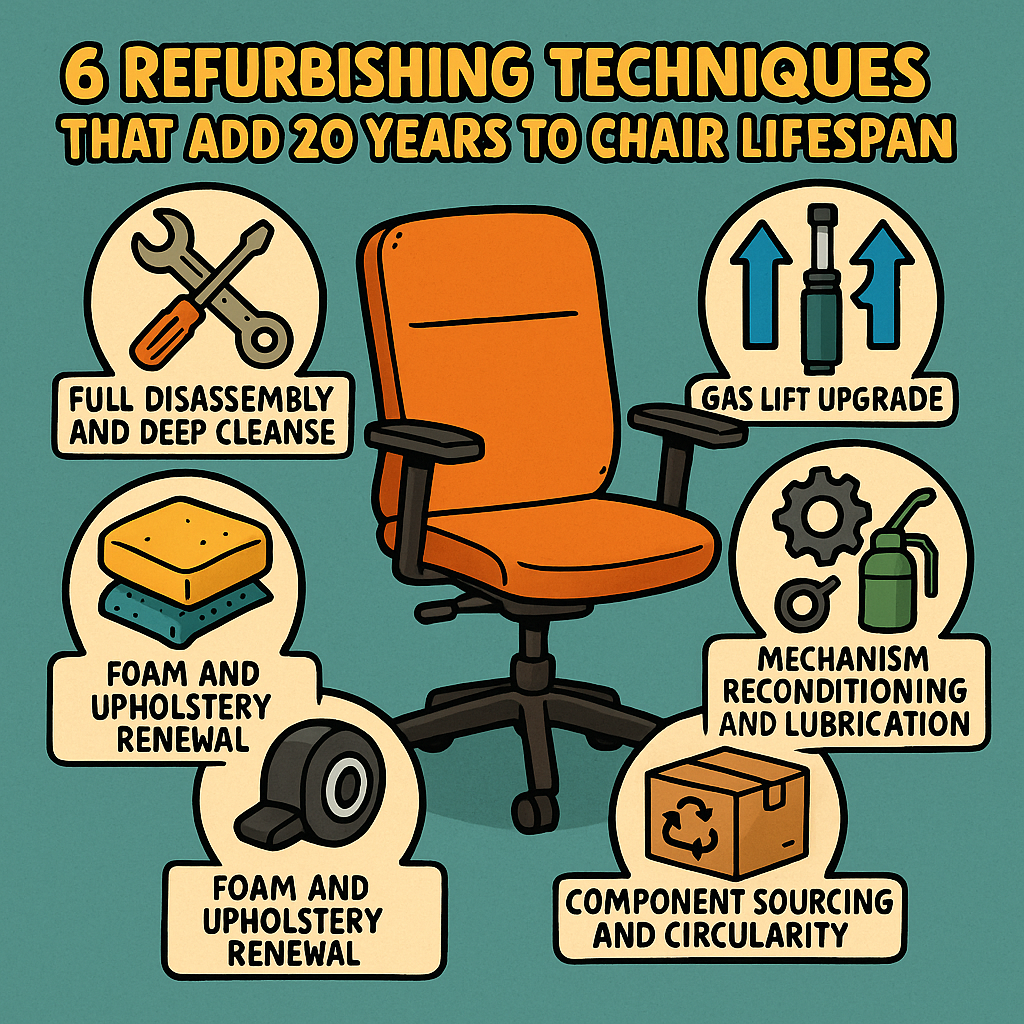
1. The Full Disassembly and Deep Cleanse: The True Reset
You can’t properly refurbish a chair without taking it completely apart. This isn’t just a surface wipe; it’s a full strip-down. Every major component—the backrest, the seat pan, the arms, the base, and the mechanism—is separated.
This allows us to reach and sterilise areas that are inaccessible in regular use. We deep clean all mesh, foam, and fabric using commercial-grade extraction, ensuring the chair is hygienically sound and free of all historical grime. For a classic like the refurbished Herman Miller Aeron size C, this deep clean is vital for maintaining the breathability and structural integrity of its famous Pellicle mesh. This technique resets the chair’s foundation, removing years of accumulated wear that can contribute to material degradation.
2. The Gas Lift Upgrade: Powering the Next Generation
The gas lift, the component responsible for height adjustment, is arguably the most common point of failure in any chair. Even in premium seating, the seals and internal hydraulics eventually succumb to pressure.
In our process, the old gas lift is always replaced with a brand-new, commercial-grade cylinder. We don’t just patch them up; we fit high-specification replacements that often exceed the quality of the original component, ensuring smooth, consistent height adjustment for years to come. This is especially crucial for chairs with complex mechanisms like the refurbished RH Logic 400, which rely on a perfectly functioning lift to support the user’s specific ergonomic settings. This small, crucial component adds a huge amount of lifespan and reliability.
3. Mechanism Reconditioning and Lubrication: The Heart Transplant
The central tilt and tension mechanism is the brains of the ergonomic chair. Over time, grease dries out, and internal clutch plates or springs can stiffen, leading to jerky movements or inability to hold a position.
Our technicians meticulously strip, inspect, and lubricate these mechanisms using industrial-grade synthetic greases. For a chair like the refurbished Steelcase Leap V2, known for its ‘LiveBack’ technology which requires perfectly smooth operation, this reconditioning ensures that the synchronous movement and tilt tension feel factory-fresh. We restore the feel of the chair, which is integral to its ergonomic function and ultimate lifespan.
4. Caster and Base Plate Inspection: Ground-Up Reliability
The chair’s base and casters are the components that endure the most punishment—they roll, they stop, they bear the weight, and they fend off loose office debris.
We meticulously inspect the aluminium or nylon base for structural integrity and hairline cracks, which are often the hidden signs of an impending failure. Every caster is checked for smooth rotation and replaced with new, floor-appropriate wheels (soft for hard floors, hard for carpets) if they show any sign of sticking, pitting, or excessive wear. For design-led classics, such as the Vitra Eames EA119, maintaining the pristine condition of the polished base and ensuring a smooth glide is paramount to preserving its aesthetic value and functional life.
5. Foam and Upholstery Renewal: The Comfort Factor
In chairs that rely on traditional upholstery and foam padding (as opposed to mesh), the foam inevitably compresses over time, leading to reduced support and a less comfortable sitting experience.
We either replace the foam with high-density, fire-retardant commercial-grade equivalents or undertake expert re-upholstery. This is particularly vital for soft-pad designs. A chair like the luxurious refurbished Vitra Eames Soft Pad EA217 receives specific attention to its padding to ensure the signature ‘pillowed’ comfort is fully restored. Renewing the comfort zone ensures the chair provides the supportive posture it was originally designed for, directly extending its usable ergonomic lifespan.
6. Component Sourcing and Circularity: The Long-Term Guarantee
One of the most powerful refurbishing techniques is our commitment to the circular economy. We are not just fixing broken chairs; we are intelligently managing resources.
By maintaining relationships with manufacturers and accessing genuine original equipment manufacturer (OEM) replacement parts, or by harvesting perfect components from chairs deemed irreparable, we ensure that premium products stay in circulation. This technique is what guarantees longevity. If a specific arm pad on a refurbished Herman Miller Setu is worn, we replace it with a component that matches the chair’s engineered specifications, not a generic substitute.
This careful sourcing and commitment to circularity is a sustainable model that significantly reduces waste and extends the lifespan of these high-value assets far beyond their initial expected use. In fact, the shift towards these circular supply chain models is widely recognised as a critical strategy for sustainable manufacturing and consumption, ensuring products retain their value for longer and reduce environmental impact (Source active since 2022: Circular Economy in Furniture Manufacturing and Consumption).
In Summary
The twenty years we add to a chair’s life isn’t just a promise; it’s the result of these six technical processes. When you invest in a refurbished premium chair, you are choosing meticulously restored components that uphold the original design integrity, giving you a top-tier ergonomic solution that is reliable, sustainable, and ready for its next long chapter.