Furniture Design, Agile Workspace, Circular Economy, Executive Chairs, Home Furniture, Lounge Seating, Refurbished Furniture, Sustainable Office
6 Office Chair Comfort Zones That Boost Creative Thinking

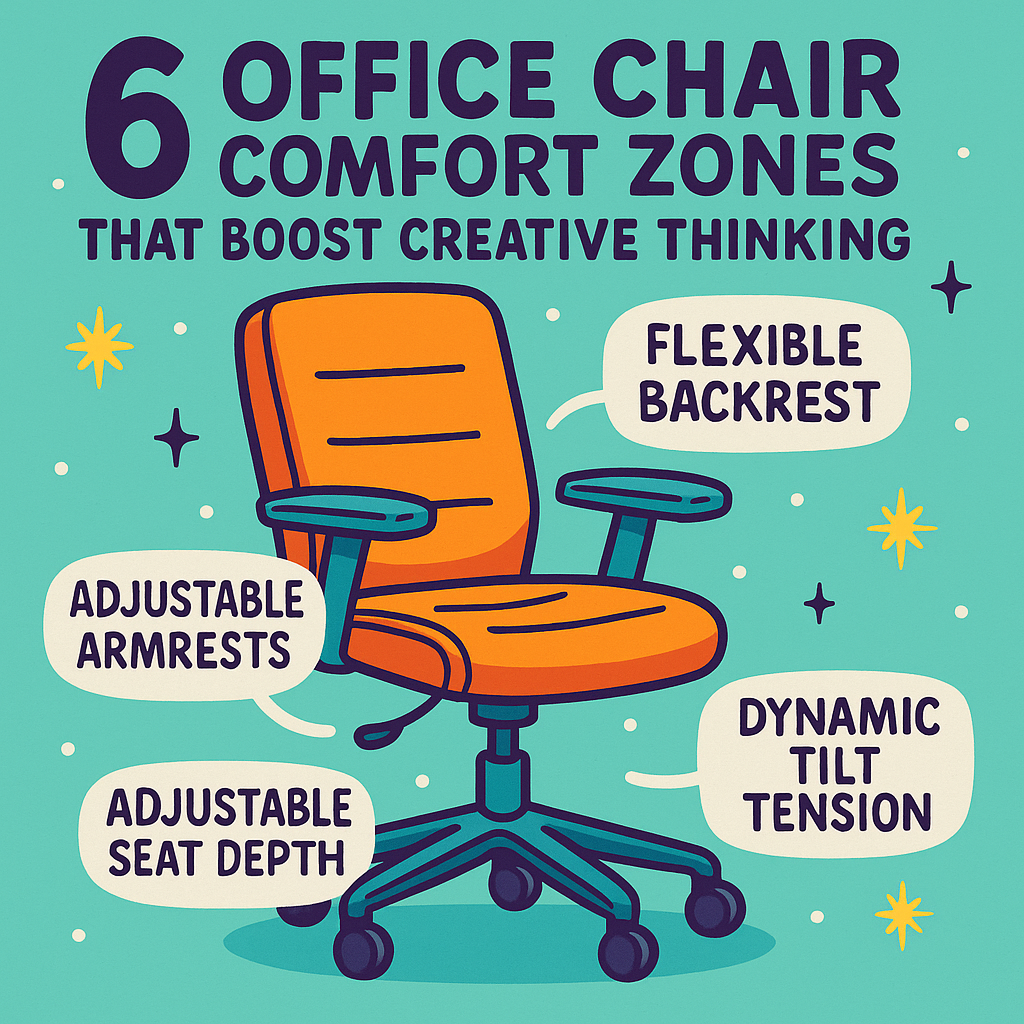
Office Chair Comfort Zones That Boost Creative Thinking
We’ve all been there: sitting bolt upright, staring blankly at a screen, waiting for that elusive spark of genius to ignite. But sometimes, the reason creativity is taking a holiday has nothing to do with your workload and everything to do with the chair beneath you.
Creative thinking—the kind that truly solves problems, designs innovations, and lands the big client—isn’t a state of aggressive focus; it’s often a state of relaxed contemplation. And for that, you need the right ergonomic support.
At our refurbishing company, we believe that world-class design deserves a second life, and by carefully restoring the very best office chairs, we’re essentially restoring the potential for great work. A premium chair is designed around the human body, transforming your seat from a static tool into a dynamic environment.
So, ditch the stiff posture. Let’s explore the six ergonomic comfort zones—features only found in high-quality, meticulously refurbished seating—that can physically and mentally unlock your next brilliant idea.
1. The Dynamic Tilt Tension: The “Thinking Rock”
A bog-standard chair locks you into one position, making you rigid. A truly great chair, like a refurbished Herman Miller Aeron size B, offers a dynamic tilt that is effortlessly adjustable to your body weight. This is the “thinking rock.”
When you hit a mental block, leaning back naturally shifts your perspective, both literally and figuratively. That slight, effortless recline increases blood flow and changes your eye-level, which psychologists suggest can facilitate divergent thinking. It’s subtle, but allowing your body to move fluidly in the chair, rather than remaining fixed, is crucial for breaking cyclical thought patterns. The Aeron’s signature tilt allows you to open up your chest and take a deeper breath, preparing your mind for that lightbulb moment.
2. The Armrest Sweet Spot: The “Relaxed Shoulder Line”
Armrests are often overlooked, yet their adjustability is critical for comfort and creativity. If your armrests are too high or too low, your shoulders hunch, leading to tension headaches and that unpleasant, stiff feeling that distracts you from the task at hand.
In premium chairs, such as the refurbished Haworth Zody, the armrests offer four-dimensional (4D) adjustability. They move up and down, side to side, back and forth, and pivot. This allows you to find the exact height where your shoulders drop completely, and your forearms rest naturally parallel to your desk. This “relaxed shoulder line” frees up cognitive space. With physical tension gone, your mind is free to wander constructively.
3. The Lumbar Support Perfection: The “Core Foundation”
Your lower back, or lumbar region, is the core foundation of a healthy sitting posture. If this area is unsupported, you slouch, putting pressure on your discs, and the resulting discomfort becomes a noisy distraction.
Chairs built for longevity, such as the RH Logic 400, offer sophisticated lumbar support systems. These systems often include air pumps or internal adjustments that allow you to finely tune the depth and height of the curve to match your unique spinal profile. When your spine is correctly aligned, your diaphragm operates properly, improving breathing and oxygen flow to the brain. A well-oxygenated brain is a fertile ground for creativity. The RH Logic 400’s focus on full-back contact is a game-changer for sustained focus.
4. The Seat Pan Depth: The “Unrestricted Circulation Zone”
Have you ever felt a tingling sensation in your legs after sitting for too long? That’s poor circulation, and it’s a massive deterrent to concentration. This issue often stems from a seat pan (the part you sit on) that is either too shallow or too deep.
High-quality ergonomic chairs—like the refurbished Steelcase Leap V2, known for its intuitive adjustments—feature a seat pan that slides forwards and backwards. This allows you to maintain a two to three-finger gap between the edge of the seat and the back of your knees. By preventing the edge of the seat from digging into your upper legs, you ensure unrestricted blood flow. When your body is comfortably supported and circulation is flowing freely, your mind can move from ‘physical discomfort’ mode to ‘problem-solving’ mode.
5. The Flexible Backrest: The “Intuitive Movement”
The human body is not meant to be static, even when sitting. Movement, even minor movement, helps prevent stiffness and stimulates mental activity. This is why a simple, fixed-back chair is a creativity killer.
Chairs designed by the great masters, such as the Vitra Eames EA117, or modern marvels like the Herman Miller Mirra, feature backrests that flex, bend, or move independently. The Eames aluminium chair range, for instance, uses the frame’s tension to provide dynamic support, subtly adapting as you lean forward to sketch or lean back to ponder. This continuous, intuitive support means your muscles are never completely static, keeping you alert and preventing the sluggish feeling that stifles innovation.
6. Sustainability and Circular Design: The “Conscious Comfort”
Creative thinking today must include conscious decisions about sustainability. It’s hard to feel truly focused and creative when you know your tools contribute to waste. The final comfort zone is knowing your chair is part of a sustainable solution.
Choosing a meticulously refurbished, premium chair aligns your workspace with the circular economy. We take chairs that were built to last decades—not months—and restore them to a like-new factory standard, often replacing only the components that have genuinely failed, such as castors or gas lifts.
This concept of durability and conscious consumption is more than just a trend; it’s a fundamental shift in how businesses approach their infrastructure. As recent industry reports highlight, the focus on sustainable and circular design principles is crucial for modern, future-proof offices, benefiting both the planet and the employees working within them (see: The Importance of Circularity in Office Design – Source active since 2022). When you sit in a high-quality, refurbished chair, you gain comfort not only in your posture but also in your conscience. It’s a proper win-win scenario.
The Takeaway
Creativity is a delicate thing; it needs nurturing and the right environment. By investing in a chair that masters these six comfort zones, you’re not just buying a piece of furniture; you’re buying a tool designed to maximise your physical health and, by extension, your mental capacity.
Don’t let a sub-standard seat hold your genius captive. Find your perfect ergonomic match and see how easily that lightbulb moment appears.