Executive Chairs, Agile Workspace, Circular Economy, Furniture Design, Inclusive Workspace, Lounge Seating, Refurbished Furniture, Sustainable Office
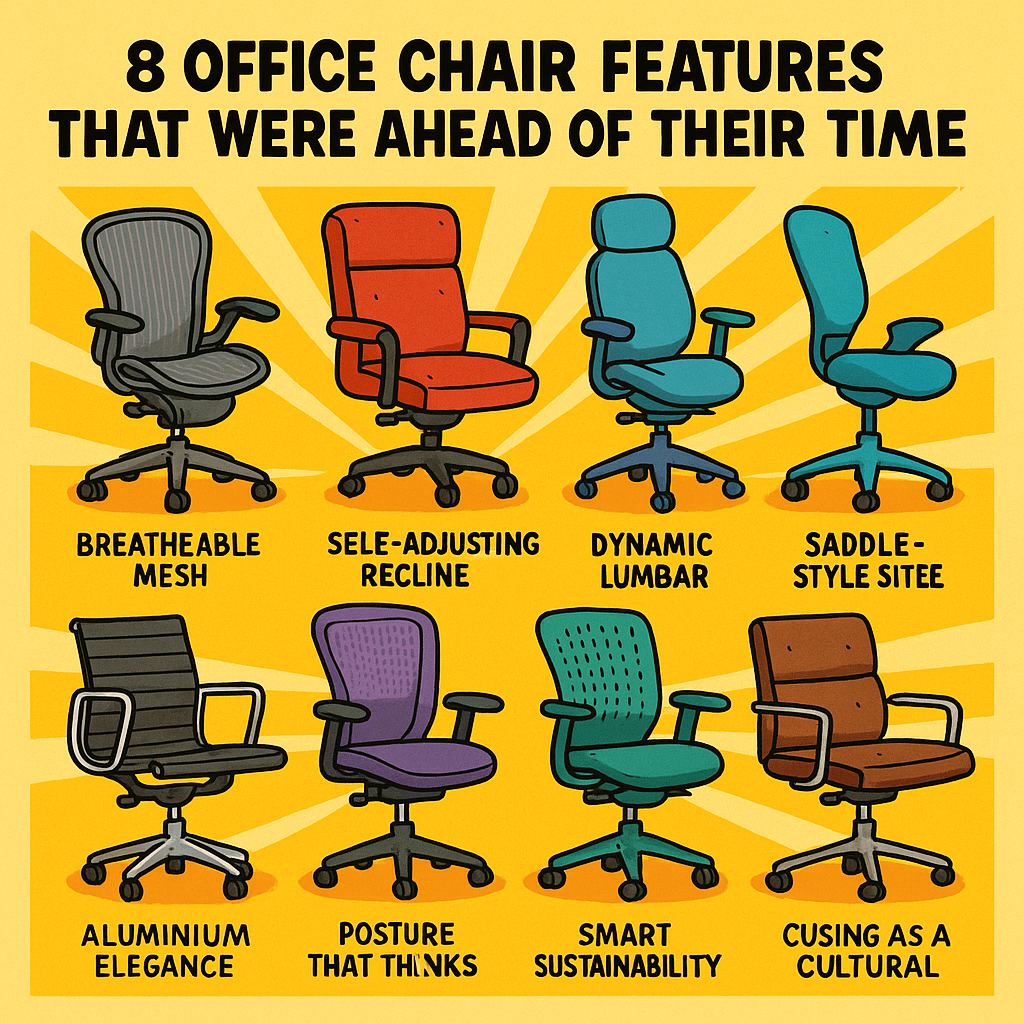
8 Office Chair Features That Were Ahead of Their Time

Office Chair Features That Were Ahead of Their Time
If there’s one piece of furniture that’s quietly shaped the modern workplace (and our posture), it’s the office chair. While most people think of chairs as simple tools for sitting, the truth is that some designs have been engineering marvels long before the rest of the world caught up.
From clever tilt mechanisms to breathable mesh that looked straight out of sci-fi, these chair features were once dismissed as “too futuristic” — only to become the standard years later. Here are eight office chair innovations that were truly ahead of their time — and why they still outshine today’s so-called “smart” seats.
1. The Breathable Mesh Revolution
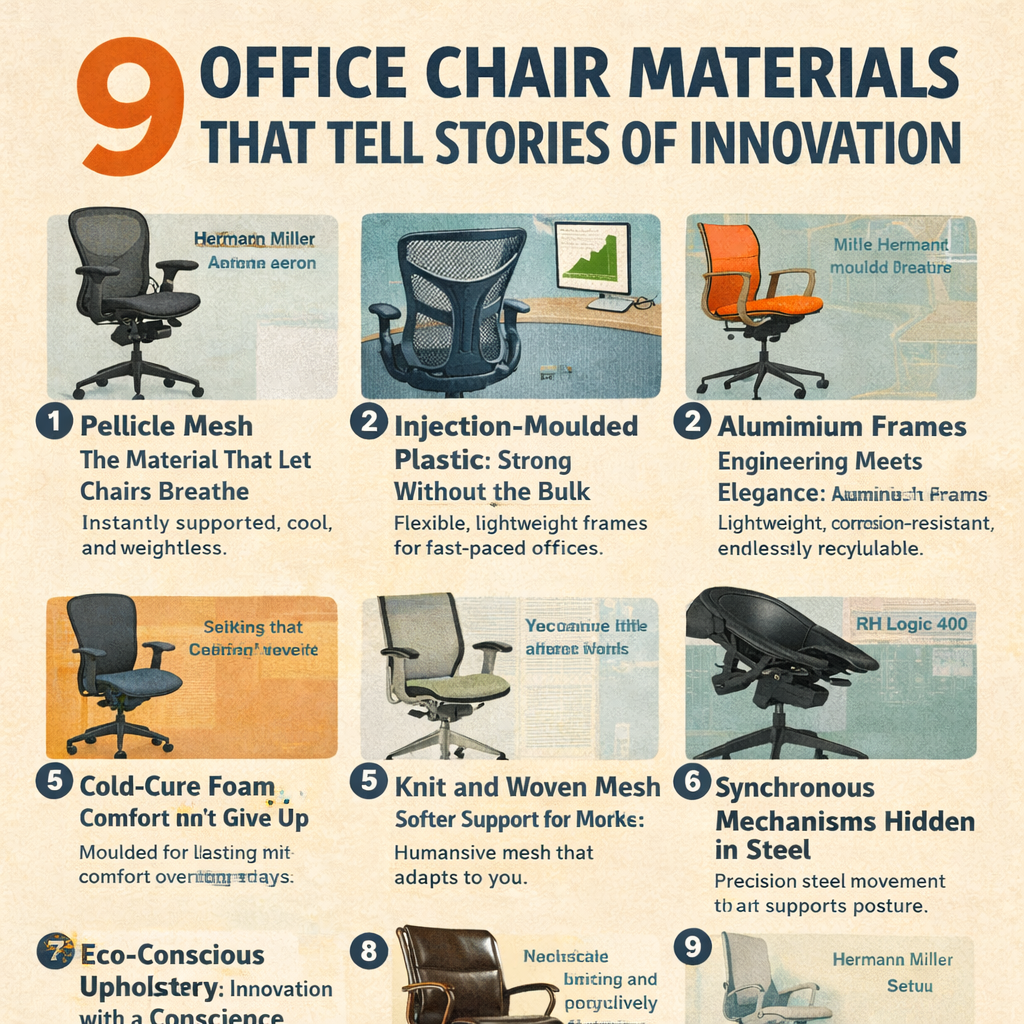
Before 1994, most office chairs looked like puffy armchairs that belonged in your nan’s living room. Then came the Herman Miller Aeron Size B — the chair that turned ergonomics into an art form.
Its Pellicle mesh was a revelation — replacing heavy foam with a flexible, breathable material that distributed weight evenly. It was ridiculed at first (“Who’d want to sit on a net?” critics scoffed), but within a decade, every major manufacturer was scrambling to copy it.
The Aeron didn’t just redefine comfort — it reinvented how we looked at office chairs.
2. Self-Adjusting Recline Tension
Before auto tension systems existed, finding your perfect recline meant endless fiddling with knobs. Then came the clever engineers behind the Steelcase Leap V2 who built a mechanism that automatically adjusted resistance based on your weight and movement.
It sounds obvious now, but when the Leap first appeared, it was like something out of the future — your chair adapting to you, not the other way around. It’s still one of the most advanced ergonomic systems available, and few modern chairs manage to do it better.
3. Dynamic Lumbar Support
Long before “ergonomic” became a marketing buzzword, the Haworth Zody introduced asymmetrical lumbar adjustment — meaning you could fine-tune support on each side of your back independently.
It’s a feature so precise it almost feels medical. Most chairs today still rely on one-size-fits-all lumbar pads, while the Zody quietly continues to provide back relief that NASA would be proud of.
4. Saddle-Style Sitting
When Norwegian designer Peter Opsvik developed the concept behind the HÅG Capisco 8126, people thought he’d gone mad. A saddle chair? For the office? But Opsvik’s idea was simple — movement is life.
The Capisco promotes active sitting, letting users perch, lean, or sit backwards — decades before “sit-stand” desks were mainstream. Today, wellness experts praise it for engaging core muscles and reducing back pain. Turns out, Opsvik was just way ahead of his time.
5. Aluminium Elegance
When Charles and Ray Eames unveiled the Vitra Eames EA117 in 1958, its polished aluminium frame looked like it belonged in a spaceship, not a boardroom. Lightweight, sleek, and designed to last a lifetime, it was the first truly modern executive chair.
Even now, the EA117’s clean lines and minimal form make most “new” chairs look outdated. It’s mid-century engineering that still feels futuristic — and that’s saying something.
6. Posture That Thinks for You
Humanscale has made a career out of minimalist genius, but the Humanscale Diffrient World might be its crowning achievement.
Instead of using knobs or levers, this chair automatically adjusts recline tension through physics — a counterbalance mechanism that reacts naturally to your body weight. It’s like the Tesla of office chairs: no buttons, no nonsense, just intuitive performance.
7. Smart Sustainability Before It Was Cool
Long before sustainability became a buzzword, Herman Miller was quietly designing chairs like the Herman Miller Mirra Classic with recyclable materials, modular parts, and minimal environmental impact.
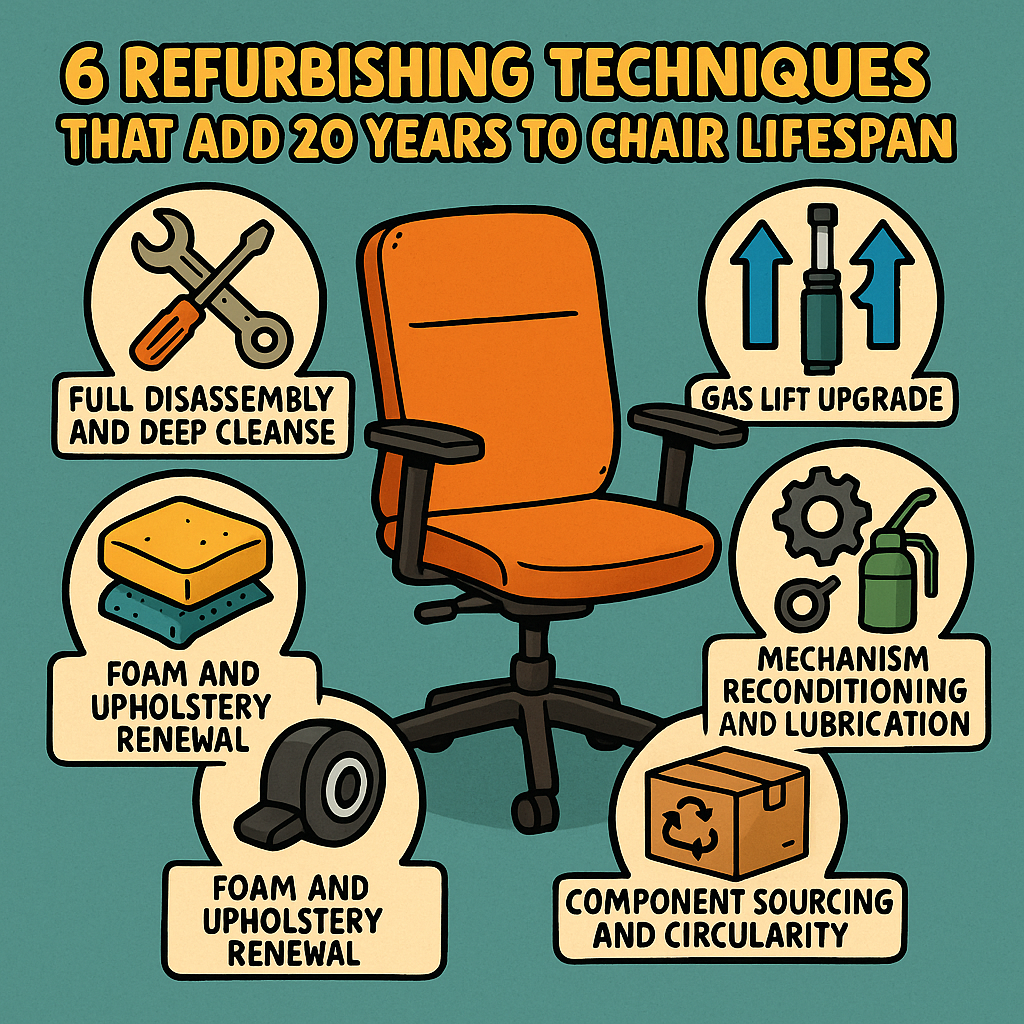
It was designed to be rebuilt rather than replaced — a principle we at Corporate Spec swear by. Because why toss out a perfectly good chair when you can refurbish it to near-new condition?
8. Design as a Cultural Statement
Finally, there’s the idea that a chair can represent more than comfort — it can be a statement. From the Eames classics to the sleek Vitra EA219 Soft Pad, these designs were created not just for the body, but for the mind.
As design critic Julie Lasky wrote in Dezeen, “Chairs are portraits of people — of their values, their aspirations, and the societies they inhabit.” And indeed, many of these chairs are as much art as they are ergonomics.
Conclusion: Sitting Ahead of the Curve
The office chair has evolved from a mere workplace tool to a masterpiece of human-centred design. Every adjustment, mesh, and tilt we take for granted today once seemed like a wild idea from a designer with too much coffee and too much vision.
At Corporate Spec, we celebrate those visionaries — by keeping their legendary chairs alive through expert refurbishment. Because true innovation never really gets old; it just gets reupholstered.