Executive Chairs, Agile Workspace, Circular Economy, Color Psychology, Furniture Design, Home Furniture, Inclusive Workspace, Refurbished Furniture, Sustainable Office
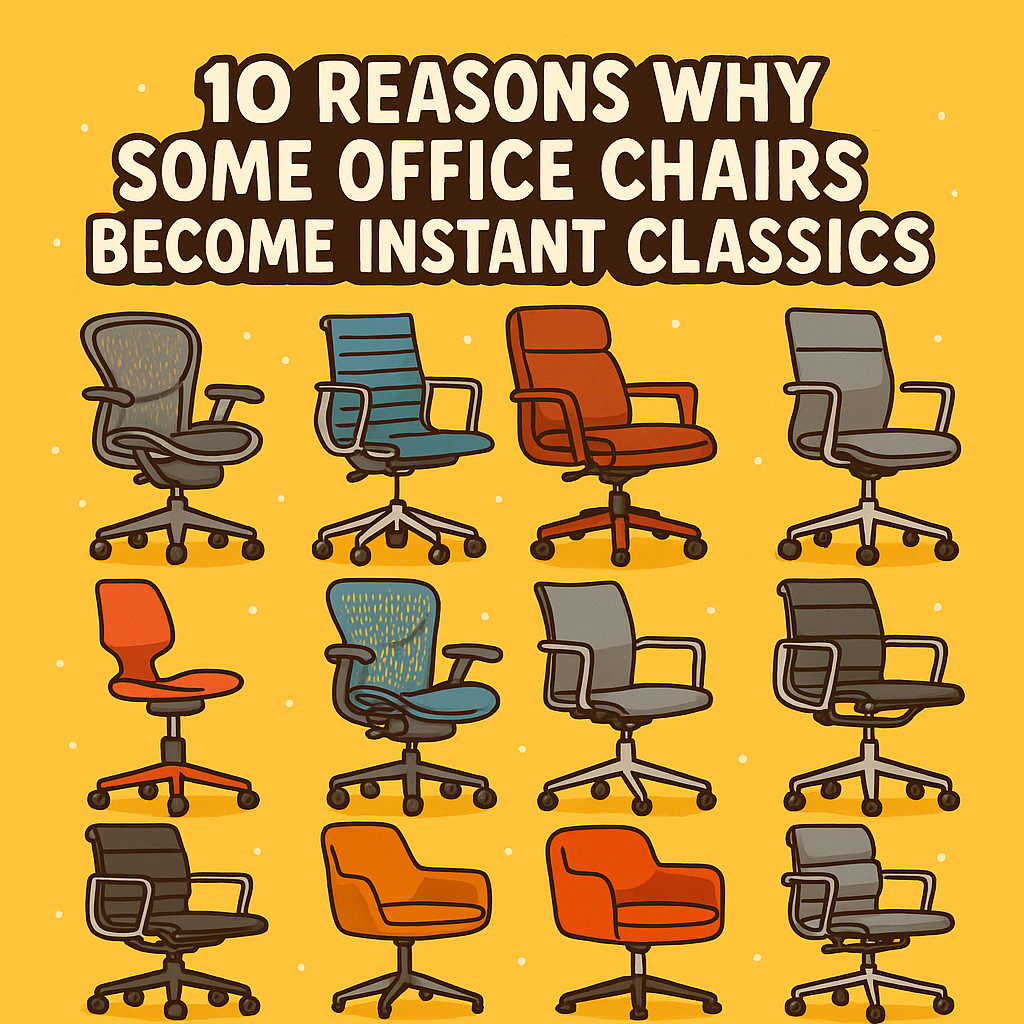
10 Reasons Why Some Office Chairs Become Instant Classics

Reasons Why Some Office Chairs Become Instant Classics
There’s something oddly poetic about an office chair that transcends its practical purpose. Some chairs don’t just exist — they endure. They become icons, whispered about in design studios, spotted in blockbuster films, and copied endlessly by manufacturers hoping to capture that elusive mix of comfort and charisma.
But what exactly makes an office chair an instant classic? It’s not just about looking sleek in a boardroom (though that certainly helps). From ergonomic genius to cultural influence, here are ten reasons certain office chairs earn their legendary status while others fade into obscurity faster than last year’s swivel trend.
1. They Redefine Comfort — Not Just Provide It
Let’s start with the obvious. The Herman Miller Aeron Size B didn’t just make sitting comfortable — it redefined what comfort meant.
Back in the ‘90s, everyone was stuffing foam into chairs like it was going out of fashion. Then Herman Miller turned up with a chair made of mesh and science, offering ergonomic support that adjusted to you. Critics said it looked like a lawn chair. A decade later, it was in every tech office from London to Silicon Valley.
Instant classic.
2. They’re Designed to Last a Lifetime
Timeless chairs are built like fine watches — precision-engineered and nearly indestructible. Take the Vitra Eames EA117, designed by Charles and Ray Eames in 1958.
It’s still in production over six decades later because every line, screw, and curve just works. The aluminium frame doesn’t rust, the upholstery ages gracefully, and the tilt feels smoother than most modern chairs. When you can’t improve perfection, you just keep making it.
3. They Look Good in Any Era
Some designs scream a specific decade — you can practically hear disco when you see them. Others, like the Vitra Eames EA219 Soft Pad, seem immune to time.
Its silhouette, polished metal, and soft leather pads manage to feel retro and futuristic at once — a rare balance that keeps designers coming back for more. If a chair can look equally at home in Mad Men and a modern co-working space, it’s probably a classic.
4. They’re Ergonomically Revolutionary
The Steelcase Leap V2 doesn’t just sit there looking pretty — it moves with you. Its LiveBack technology flexes as your spine moves, mimicking natural motion to keep you supported even through marathon email sessions.
At the time of its release, it was pure innovation. Today, it’s still one of the most scientifically validated ergonomic chairs on the market. Some call it engineering. We call it sorcery.
5. They Tell a Story
Every classic has a backstory, and some of them are as fascinating as the chairs themselves. The HÅG Capisco 8126 was inspired by a horse saddle — yes, really.
Its designer, Peter Opsvik, wanted to keep the human body in motion even while sitting. The result? A chair that looked bizarre at first but became a cult favourite among physiotherapists, creatives, and anyone who prefers their posture not to resemble a question mark.
6. They Influence the Entire Industry
When the Herman Miller Mirra Classic hit the market, it didn’t just compete — it changed the rules. It made sustainability and adjustability mainstream.
Chairs that came after suddenly had to offer better lumbar support, smarter materials, and recyclable parts — because Mirra set the bar. A true instant classic doesn’t just sell — it shifts the market.
7. They Evoke Emotion (Yes, Really)
As design critic Julie Lasky put it in Dezeen, “Chairs are portraits of people — of their values, their aspirations, and the societies they inhabit.”
That emotional connection is exactly why some chairs feel personal. The Vitra Eames EA217, for example, isn’t just furniture — it’s a mood. The supple leather, chrome frame, and gentle recline all exude quiet authority. It’s what confidence would look like if it were a chair.
8. They Master the Balance Between Form and Function
Good design solves problems. Great design makes it look effortless. The Humanscale Diffrient World ditched all unnecessary knobs and levers, opting for physics-driven self-adjustment instead.
It’s light, minimal, and elegantly functional — the Marie Kondo of seating. Sometimes, less truly is more.
9. They’re Backed by Brilliant Philosophy
A classic chair isn’t just about mechanics — it’s about philosophy. The Herman Miller Aeron Size C, for example, was built on the principle of inclusivity — designed to fit a wide range of body types long before “inclusive design” became a trend.
That vision gave it staying power. You don’t just sit on an Aeron; you sit within an idea that comfort should be democratic.
10. They Age Gracefully — Like a Fine Scotch
Some chairs improve with age, developing character and charm that newer models can’t replicate. The Boss Design Kruze Medium Back, with its elegant curves and solid build, is one of those.
Refurbished versions often look better than new ones, especially when lovingly restored by professionals who know how to bring out the craftsmanship beneath the wear. Much like a vintage Aston Martin, the best chairs don’t just survive the years — they thrive on them.
In Conclusion: Why “Classic” Never Gets Old
The secret behind an instant classic lies in its DNA — innovation, comfort, design, and a touch of human emotion. These chairs weren’t built just to fill an office; they were made to define what an office could feel like.
At Corporate Spec, we keep that legacy alive by refurbishing icons that were built to last. Because when a chair truly deserves the word classic, replacing it isn’t progress — it’s sacrilege.