9 Ways Office Chairs Became Status Symbols in Modern Workplaces

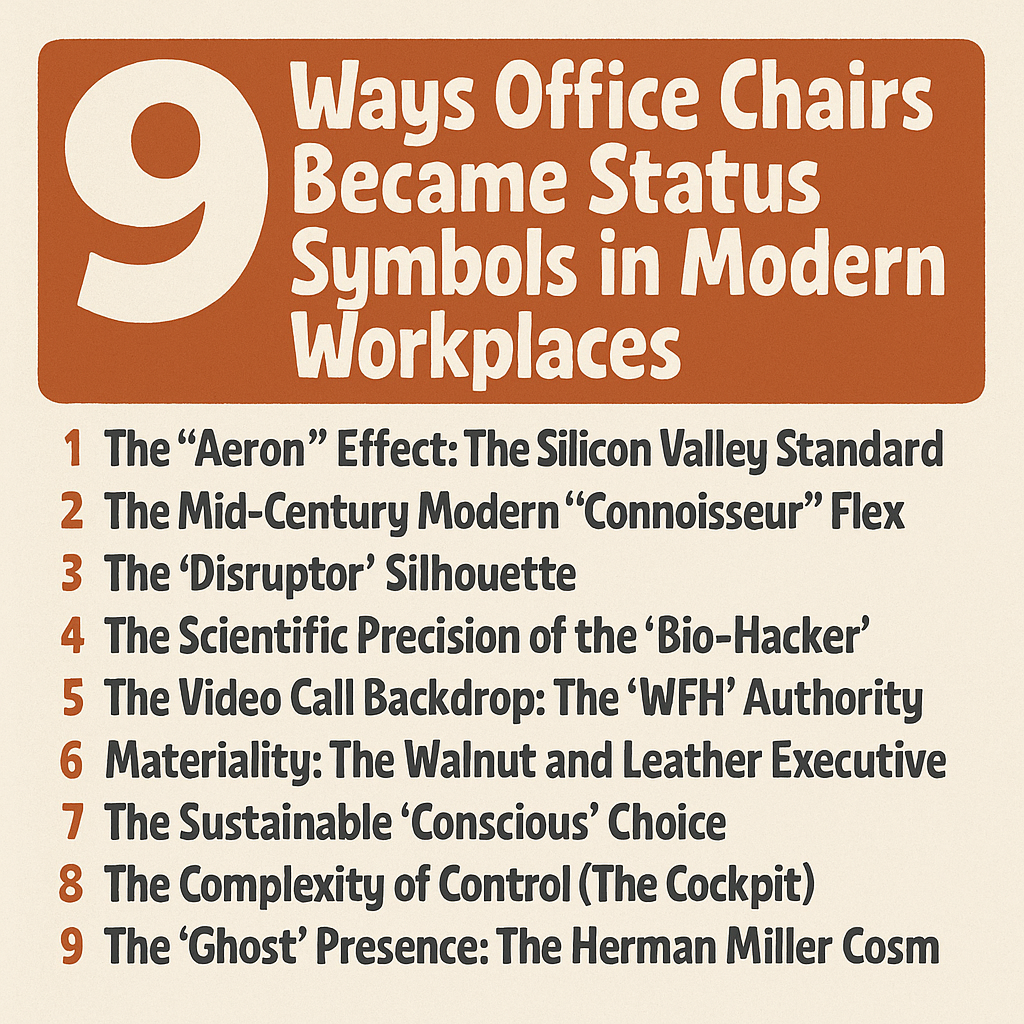
Ways Office Chairs Became Status Symbols in Modern Workplaces
In the ecosystem of the modern office, there is a silent language being spoken. It’s not communicated through emails, Slack messages, or quarterly reports. It’s communicated through furniture.
Historically, status in the workplace was defined by the size of your office, the view from your window, or perhaps the thickness of the carpet. But as walls have come down and open-plan (or home-based) working has taken over, the metrics of success have shifted closer to the body. Quite literally.
The office chair has transcended its role as a mere functional object—a place to park yourself for eight hours—and has evolved into a potent symbol of professional identity, seniority, and discernment. It is the new power suit. At our refurbishing company, we see this hierarchy every day. When we restore a premium chair, we aren’t just fixing a mechanism; we are polishing a badge of honour.
Here are nine ways the humble office chair has ascended to become the ultimate status symbol in the contemporary working world.
1. The “Aeron” Effect: The Silicon Valley Standard
If there is one chair that single-handedly turned seating into a status symbol, it is the Herman Miller Aeron. During the dot-com boom of the late 90s, this chair became the throne of the internet millionaire. It signalled that you weren’t just a corporate drone; you were an innovator.
Today, that legacy endures. Owning a refurbished Herman Miller Aeron size B is a subtle nod to that culture of high-performance and tech-savviness. It says you understand the history of modern work. The exposed pellicle mesh and the visible engineering are not just ergonomic features; they are a public declaration that you value function, airflow, and iconic industrial design. It’s a chair that doesn’t need to shout to be heard; its silhouette is instantly recognisable to anyone in the know.
2. The Mid-Century Modern “Connoisseur” Flex
While some opt for technical wizardry, others choose status through timeless aesthetics. This is where the “design classic” comes into play. Sitting in a chair designed by Charles and Ray Eames is a statement of taste. It suggests that you view your work as a craft and your environment as an art gallery.
A pristine, refurbished Vitra Eames Soft Pad EA217 is the epitome of this. With its genuine leather pads and polished aluminium frame, it doesn’t look like a piece of office machinery; it looks like a piece of furniture you’d find in a high-end Mayfair apartment. Choosing this chair signals that you have moved beyond the need for overly complicated levers and dials, and have arrived at a place of confident, understated luxury. It’s a proper touch of class.
3. The “Disruptor” Silhouette
In the creative industries and the start-up world, status is often about doing things differently. The traditional high-back executive leather chair can sometimes feel a bit “old guard.” The modern creative director or tech founder often wants a chair that looks like it arrived from the future.
Enter the refurbished HAG Capisco 8126. This chair is a conversation starter. Its saddle-like seat and cruciform backrest encourage you to sit forwards, backwards, or sideways. Using a Capisco signals that you are an active thinker, a dynamic mover, and someone who refuses to be constrained by traditional norms. It’s the ultimate status symbol for the agile mind—showing you’re ready to pivot at a moment’s notice.
4. The Scientific Precision of the “Bio-Hacker”
For a certain type of professional, status is derived from data, optimization, and health. They view their body as an asset that needs to be protected to ensure maximum ROI (Return on Investment). For these individuals, the status symbol is the chair with the most advanced biomechanics.
The refurbished Steelcase Leap V2 fits this bill perfectly. Its “LiveBack” technology mimics the movement of the spine, changing shape as you move. Possessing a chair of this ergonomic calibre shows that you take your output seriously. It implies that your time is expensive, and therefore, fatigue is not an option. It’s a very smart, very calculated form of status that prioritizes longevity over flashiness.
5. The Video Call Backdrop: The “WFH” Authority
The shift to hybrid working changed the visibility of office furniture. Suddenly, your chair was the most prominent item in your background during Zoom or Teams calls. The headrest, the fabric, and the shape became visible to clients and colleagues globally.
A high-back chair with a distinctive profile, like the refurbished Humanscale Freedom High Back, became a way to visually assert authority in a digital space. Its articulating headrest and counterbalance mechanism look impressive on camera. It tells the person on the other end of the line that even though you are at home, you are still “in the office” professionally. It separates the amateurs working from the kitchen table from the professionals operating from a dedicated command centre.
6. Materiality: The Walnut and Leather Executive
Despite the rise of mesh and plastic, there is still a powerful, traditional hierarchy attached to natural materials. Wood veneers and premium hides have always been associated with the boardroom.
A chair like the refurbished Boss Design Kruze medium back walnut shell captures this perfectly. The visible walnut shell exudes warmth and solidity, while the leather upholstery speaks of comfort. It bridges the gap between a lounge chair and a task chair. Having a chair with this level of finish implies you have reached a level of seniority where you are paid to think and make decisions, rather than just type furiously.
7. The Sustainable “Conscious” Choice
Perhaps the most modern form of status is ethical status. We are living in an era where excess is often frowned upon, and sustainability is applauded. Flaunting a brand-new, plastic-wrapped product is becoming less impressive than showcasing a high-quality item that has been saved from landfill.
Choosing a premium refurbished chair is a badge of honour for the environmentally conscious professional. It demonstrates a commitment to the circular economy. It shows you are smart enough to buy quality (like a Herman Miller or Steelcase) but responsible enough to buy it second-hand. As noted in recent industry discussions, the shift towards sustainable procurement is a major trend defining the modern “destination office” (Source: Sustainable Office Design Trends). The status here isn’t just about wealth; it’s about values.
8. The Complexity of Control (The Cockpit)
There is a subset of the workforce—usually engineers, developers, and analysts—who find status in complexity. They want a machine they can tune. The more levers, pumps, and dials a chair has, the more “pro” it feels.
A chair like the refurbished RH Logic 400 is essentially a cockpit for the desk worker. With controls for lumbar pump, back angle, seat depth, and tilt resistance, it requires a certain level of expertise to set up. Mastering this chair shows you are a master of your domain. It’s not a casual seat; it’s a piece of precision equipment for serious work.
9. The “Ghost” Presence: The Herman Miller Cosm
Finally, there is the status of effortlessness. The idea that you are so in tune with your work that you don’t need to adjust levers. This is a relatively new trend, embodied by chairs with “auto-harmonic” tilts that adjust automatically to the user.
The refurbished Herman Miller Cosm High Back represents this. It looks almost ethereal, like a single piece of fabric floating in space. It signals a modern, fluid approach to work. It’s the “iPhone” of chairs—sleek, intuitive, and highly desirable. It tells colleagues that you value seamless integration and modern simplicity above all else.
The Bottom Line
Whether it’s the heritage of an Eames or the technical prowess of a Steelcase, your chair is doing a lot of talking. It reflects your rank, your role, and your values. But the best part? You don’t need a CEO’s budget to access this status. By opting for refurbished, you can secure these icons of the workplace for a fraction of the cost, adding a bit of savvy financial status to the mix as well. And that, quite frankly, is just good business.